

Résumé de section
-
-
This lecture is directed to 2nd year process engineering students
Title of lecture: Mineral Chemistry
Credit: 4
Coefficient: 2
Duration: 15 weeks
Weekly timetable: 3hour
Place of teaching: amphi A2 :
Evaluation methods:
Continued assessment 40%
A final exam 60%
Professor :Dr Merzouki Soraya
-
Target
The module aims
 to achieve a transition from fundamental theory to industrial application, cultivating students' ability to solve concrete chemical problems using chemical theory.
-
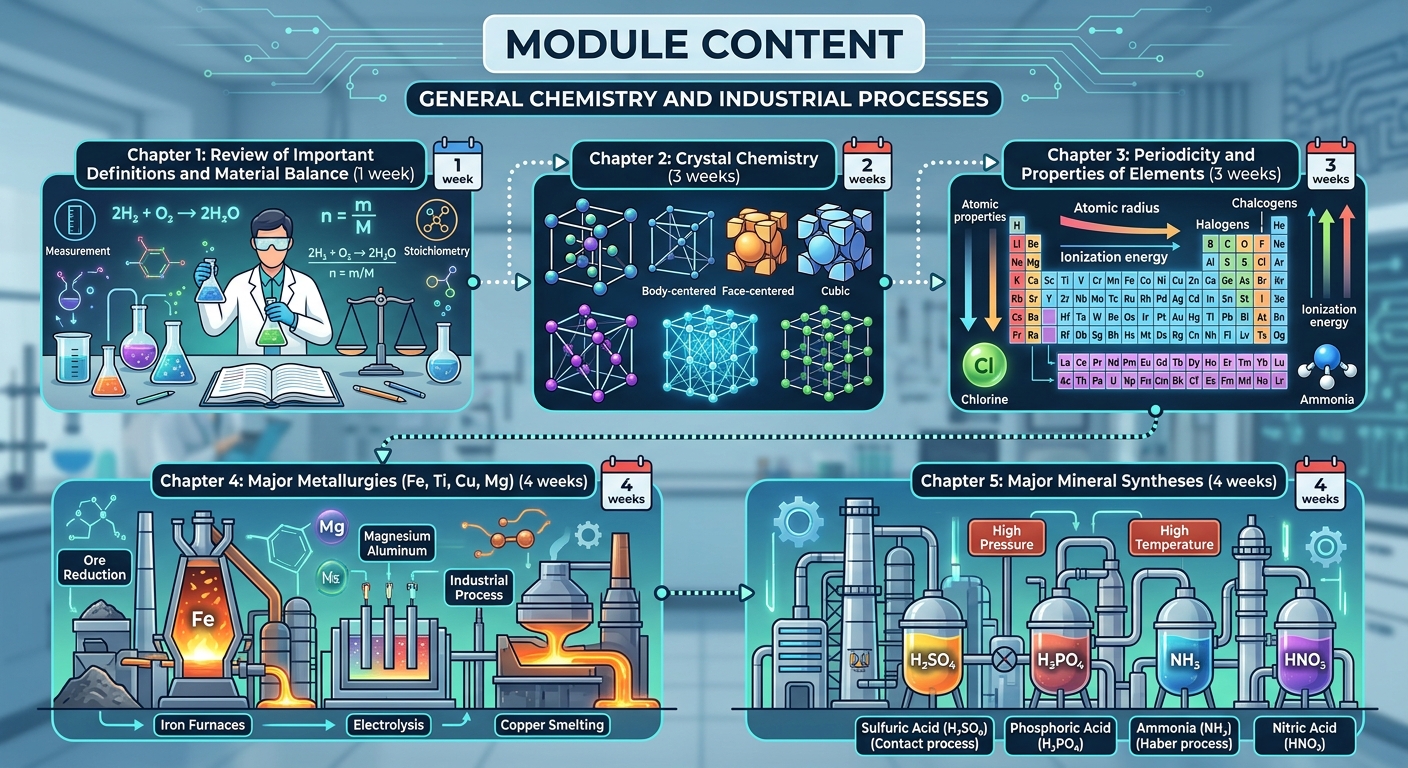
MODULE CONTENT
Chapter 1: Review of Important Definitions and Material Balance (1 week)
Objective: Review and consolidate the fundamental quantitative concepts of chemistry
Chapter 2: Crystal Chemistry (3 weeks)
Objective: Introduce students to the method of describing crystalline solids
Chapter 3: Periodicity and Properties of Elements (3 weeks)
Objective: Analyze in depth the properties of representative non-metallic elements (halogens, chalcogens, nitrogen, phosphorus, boron) and their compounds.
Chapter 4: Major Metallurgies (Fe, Ti, Cu, Mg) (4 weeks)
Objective: Understand the chemical principles and main processes of large-scale industrial metal extraction. Students should be able to explain the fundamental principles of metallurgical processes (such as reduction, electrolysis, etc.)
Chapter 5: Major Mineral Syntheses (4 weeks)
Objective: Understand the chemical principles, reaction conditions, technological processes, and industrial applications of essential inorganic compounds (sulfuric acid, phosphoric acid, ammonia, nitric acid).
-
-
-
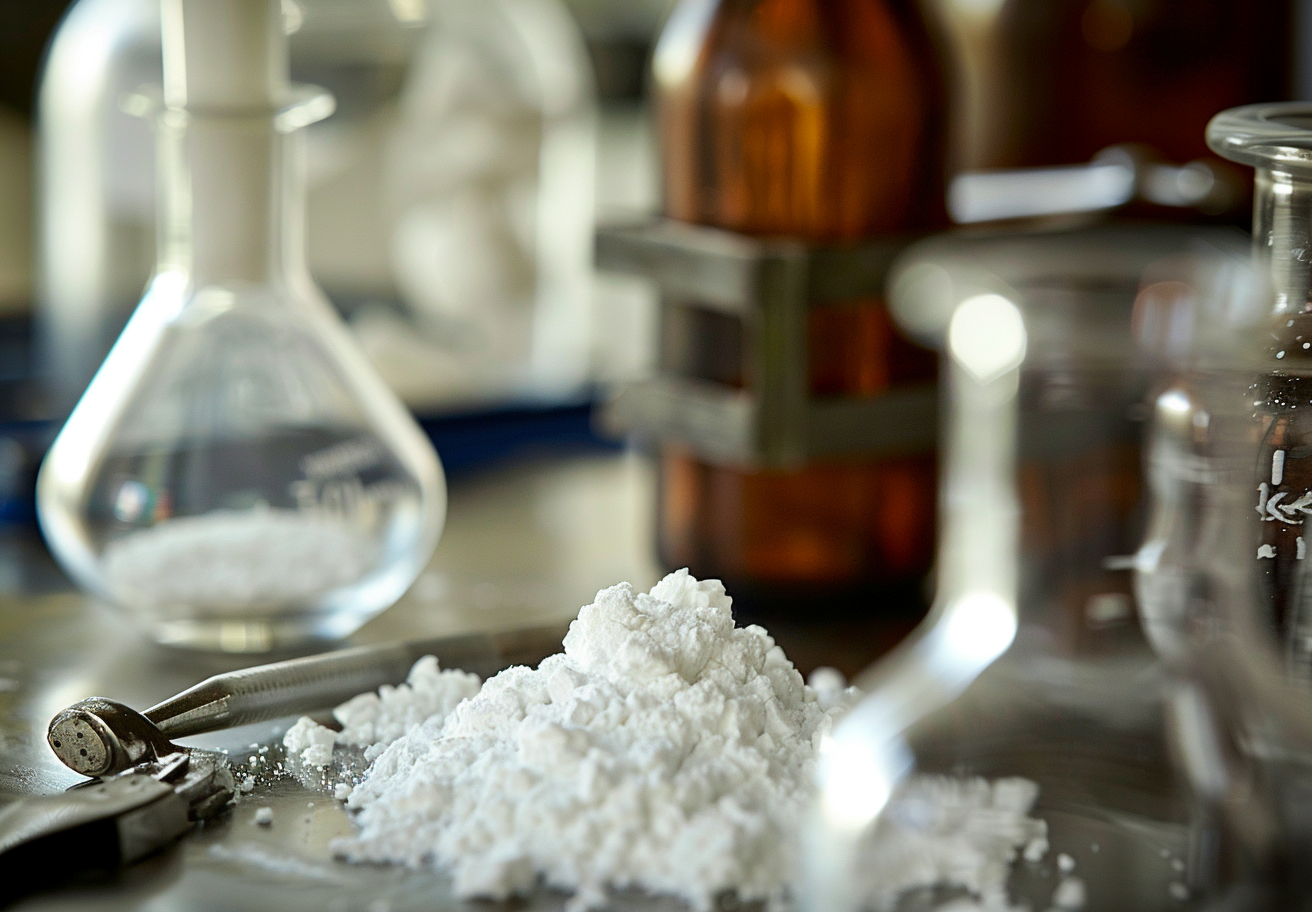
Students should be able to accurately calculate the amount of substance, molar mass, fractions (mass, molar, volumetric), and understand the concepts of limiting reagent, excess, and conversion rate calculations.
-
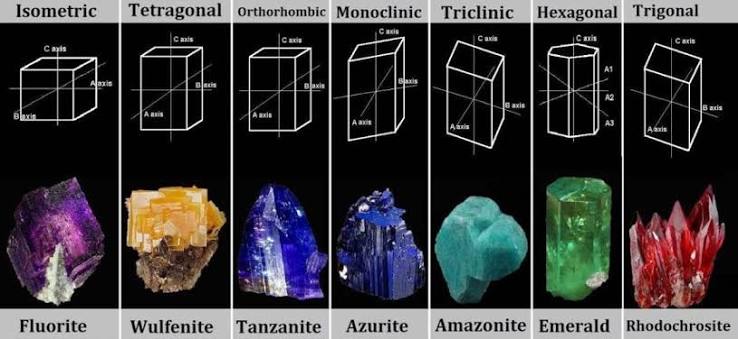
the student will be able to understand the relationship between structure and properties of solids (such as metals, ionic compounds, etc.), and lays the groundwork for studying material properties and metallurgical processes.
-
EXERCICES ABOUT
- REVIEW
- CRISTALLOCHEMISTRY PART 1