

Section Two: Colonial Period
Résumé de section
-
1. Introduction
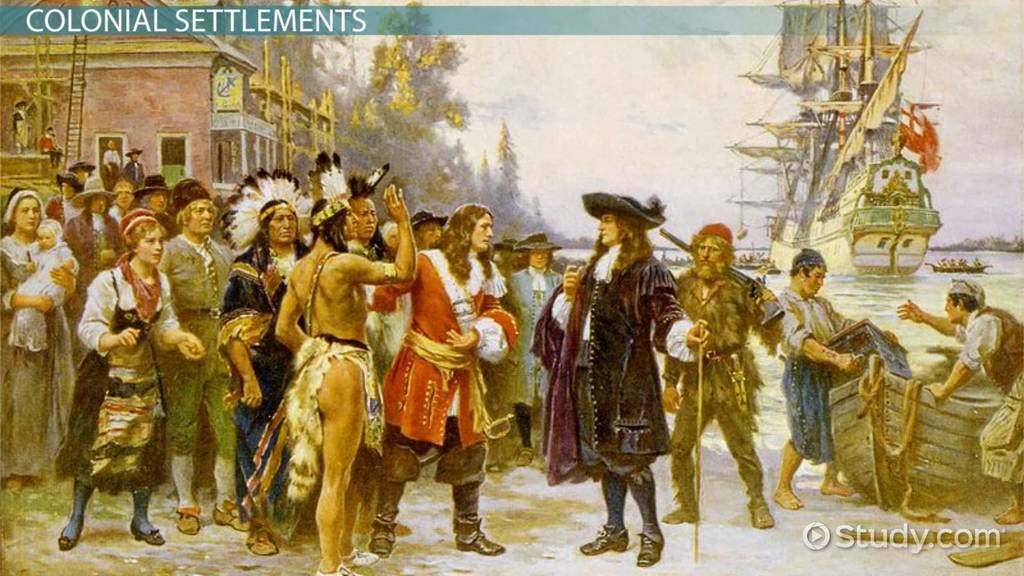
The Colonial Period of American (C.P.A.H)* history was a time of exploration, settlement, and transformation. Beginning in 1607 with the establishment of Jamestown* and culminating in the years leading up to the American Revolution, this era saw the rise of European colonies in North America. Most settlers who came to the British colonies in the 1600s were English. Others came from The Netherlands, Sweden, Germany, France, and later from Scotland and Northern Ireland. Some left their homelands to escape war, political oppression, religious persecution, or a prison sentence. Some left as servants who expected to work their way to freedom. Black Africans were sold into slavery and arrived in shackles. By 1690, the population was 250,000. Less than 100 years later, it had climbed to 2.5 million.
2. Development of the 13 Colonies
European nations had different goals when colonizing North America. Spain focused on resource extraction and religious conversion, France sought trade relationships with Native Americans, and England aimed to establish permanent settlements. Economic motives, such as the search for gold and the establishment of cash crops like tobacco, played a significant role. Additionally, religious groups, including the Puritans and Quakers, sought freedom from persecution, leading to diverse colonial societies. The development of the thirteen colonies unfolded along distinct regional lines, each shaped by unique economic, cultural, and social characteristics.
Like:
1. New England Colonies (Massachusetts, Connecticut, Rhode Island, New Hampshire):*
- Puritan Values: Dominated by Puritan religious ideals, communities like Boston and Salem emphasized strict moral codes and education. For example, Harvard College was founded in 1636 to train clergy.
- Economy: Small-scale farming (e.g., growing corn and wheat), fishing (e.g., cod fishing off the coast), and shipbuilding (e.g., shipyards in Boston) were key industries.
- Governance: Town meetings, such as those in Plymouth Colony, allowed for direct democratic participation among male landowners.
2. Middle Colonies (New York, Pennsylvania, New Jersey, Delaware):
- Diversity and Tolerance: Pennsylvania, founded by William Penn, became a haven for Quakers and other religious groups, while New York attracted Dutch, German, and Scottish immigrants.
- Economy: Known as the "breadbasket colonies," they produced wheat and other grains (e.g., in the fertile valleys of Pennsylvania). Cities like Philadelphia and New York City became major trade hubs.
- Cultural Melting Pot: The region's diversity was reflected in its newspapers, languages, and religious practices, such as the establishment of the first Lutheran church in America.
3. Southern Colonies (Virginia, Maryland, North Carolina, South Carolina, Georgia):
- Plantation Economy: Cash crops like tobacco (e.g., in Virginia) and rice (e.g., in South Carolina) dominated the economy. Georgia, initially founded as a buffer colony, later adopted plantation agriculture.
- Labor Systems: The transition from indentured servitude to African slavery was stark. For example, by the late 1600s, Virginia's tobacco plantations relied heavily on enslaved labor, and South Carolina's rice plantations became dependent on enslaved Africans' expertise in rice cultivation.
- Social Structure: The plantation system created a hierarchical society, with wealthy landowners like Virginia's planter elite (e.g., the Byrd family) at the top.
These regional differences, rooted in geography, economy, and culture, not only shaped the colonies' development but also set the stage for future conflicts and divisions in American history.
3. Settlement and Demographics
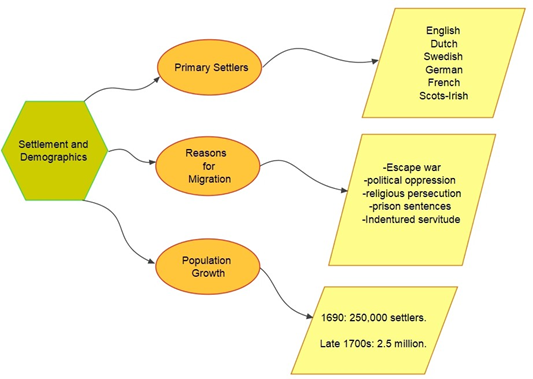
Most settlers who came to the British colonies in the 1600s were English. Others came from The Netherlands, Sweden, Germany, France, and later from Scotland and Northern Ireland. Some left their homelands to escape war, political oppression, religious persecution, or a prison sentence. Some left as servants who expected to work their way to freedom. Black Africans were sold into slavery and arrived in shackles. By 1690, the population was 250,000. Less than 100 years later, it had climbed to 2.5 million.
4. Colonial Society & Culture
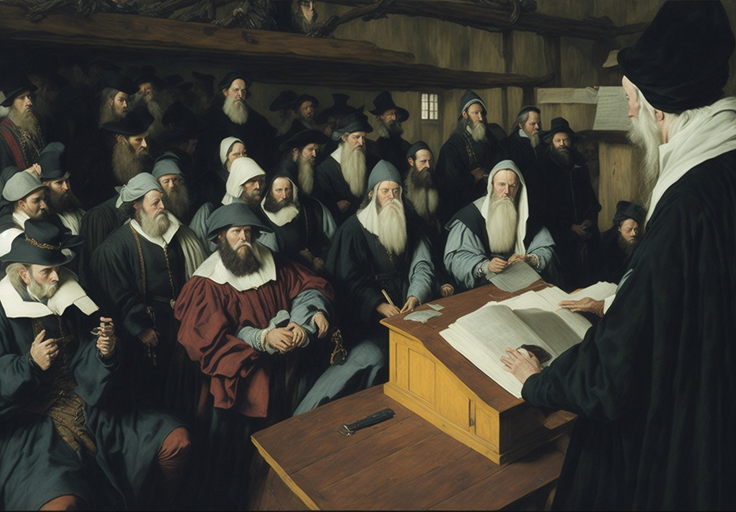
Life in the colonies varied depending on location and social class. Families played a central role, with men typically working in agriculture or trade while women managed households. Education was highly valued in New England, leading to the establishment of institutions such as Harvard in 1636. Religion influenced governance and daily life, particularly in Puritan communities, where strict moral codes shaped society. The colonies also saw growing consumer culture, with imported goods playing an increasing role in daily life.
- The rise of print culture, including the publication of newspapers and almanacs, with Benjamin Franklin's Poor Richard's Almanack (1732) being a prime example.
- Flourishing colonial music, art, and literature, with early American painters like John Singleton Copley gaining recognition.
- Social stratification, where wealthy landowners in the South lived in grand plantation homes while poorer farmers and laborers struggled for economic stability.
Slavery played an integral role in colonial society, especially in the Southern Colonies. The harsh conditions on plantations led to the development of distinct African American cultures, including the blending of African traditions with Christian practices. Enslaved people created rich oral histories, spirituals, and folk traditions that would persist through generations.
5. Relations with Native Americans
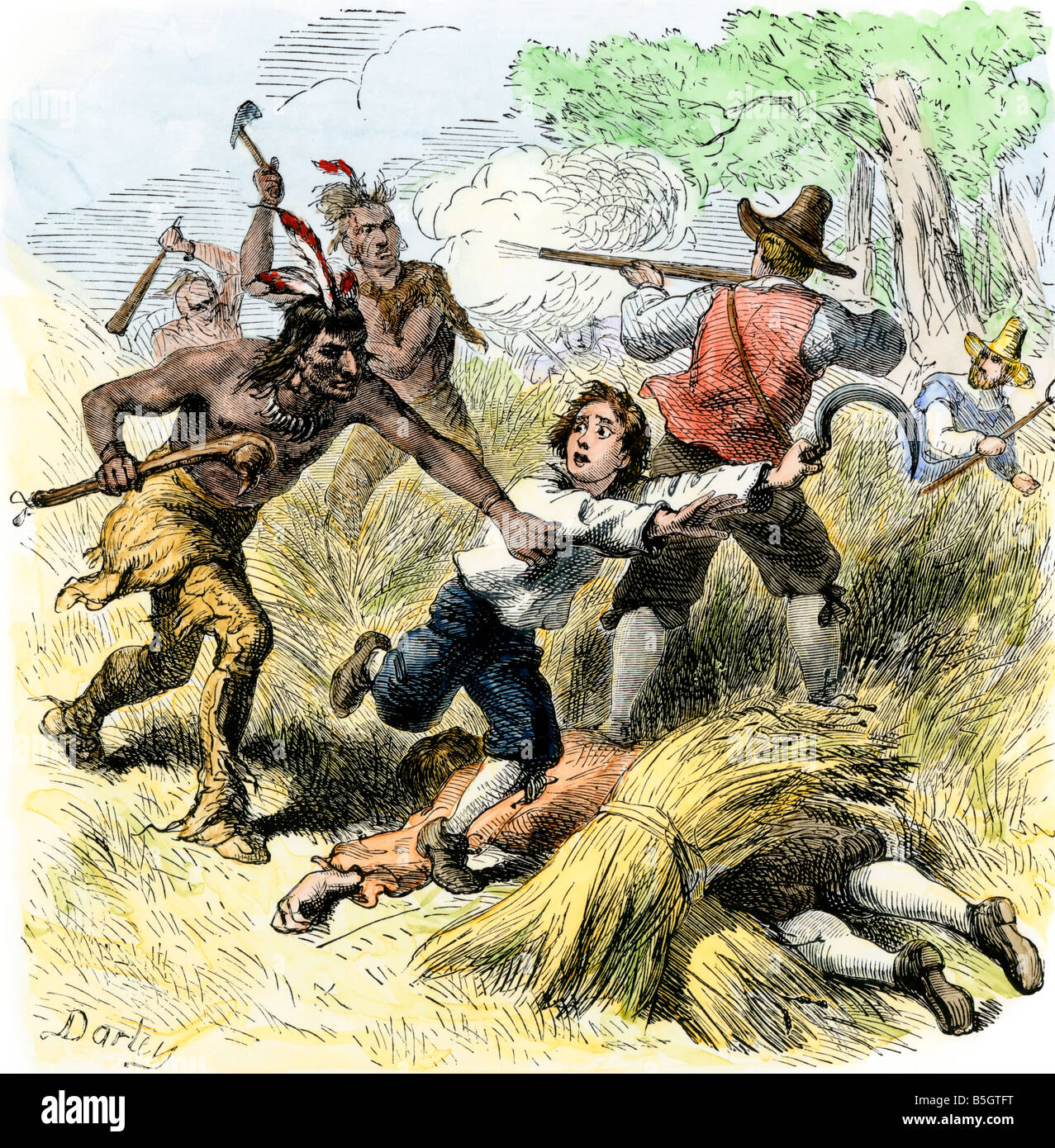
Relations between European settlers and Native Americans were complex, ranging from trade partnerships to violent conflicts. Early cooperation existed, as Indigenous people helped settlers adapt to the new environment. However, tensions grew as settlers encroached on Native lands, leading to conflicts such as:
- The Pequot War (1636-1638):* A conflict in New England where English settlers, allied with the Narragansett and Mohegan tribes, fought against the Pequot people, leading to the near destruction of the Pequot tribe.
- King Philip's War (1675-1676):* One of the deadliest conflicts in colonial history, in which the Wampanoag leader Metacom (King Philip) led an uprising against English settlers. The war resulted in widespread destruction and the near elimination of Indigenous resistance in New England.
- The Yamasee War (1715-1717): A significant but less well-known war in the Carolinas, where the Yamasee and other tribes fought against English settlers over trade disputes and land encroachments.
- The French and Indian War (1754-1763): A broader conflict between Britain and France, with various Native American tribes allying with either side. The war ended with British victory, leading to significant Native land losses and the Proclamation of 1763, which attempted (unsuccessfully) to limit colonial expansion westward.
6. Conclusion
The Colonial Period of American history was a transformative era marked by exploration, settlement, and the establishment of diverse societies. European colonization, driven by economic, religious, and political motives, led to the development of distinct regional cultures and economies across the thirteen colonies. While European settlers gained new opportunities, Indigenous peoples faced displacement and violence, and enslaved Africans endured unimaginable hardships. The legacy of this period continues to shape modern American society, influencing its democratic institutions, cultural diversity, and ongoing struggles with racial inequality. Understanding the complexities of the colonial era is essential for comprehending the roots of contemporary American identity and the challenges that persist today.