- Teacher: Ibtissem BOUDJAHEM
Category: M1S2: Pr-Eco

Elearning Mila University 2025-2026
Licence Génie civil (Semestre 6)
Souvent les étudiants se posent la question:
« Quelles sont les compétences qui seront acquises par nous tout le long de ce semestre ? »
Nous pensons qu’au-delà des compétences techniques et théoriques, que peut acquérir un étudiant
tout le long de son cursus, il faut préciser que l’étudiant en fin de semestre arrivera surtout à
développer sa propre vision des VRD et affiner sa compréhension des voiries et des réseaux divers.
A titre indicatif les VRD concernent aussi la construction et l'entretien des réseaux d'évacuation d'eau
de pluie, ou d'eaux usées. Ces réseaux permettent à un terrain de recevoir une construction. Ces
travaux permettent aussi l'embellissement d'un environnement urbain ou rural lors de travaux
d'enfouissement des réseaux, de pavage des rues ou de réfection des trottoirs. Ils sont fonction de
l'aménagement prévu et des besoins de la population. Ainsi, ils sont différents suivant que l'on
projette de construire un lotissement, une zone commerciale, une zone industrielle ou un espace
public.
L’étudiant apprendra donc dans cette matière l'ensemble des ouvrages et des travaux d'infrastructures
relatifs à la réalisation et à l'aménagement des voies d'accès et de circulation à la périphérie des
constructions: voiries, trottoirs, pistes cyclables, espaces verts, éclairage public, mobilier urbain,
etc.
Le module Administration des Réseaux vise à former les étudiants à la gestion des infrastructures réseau modernes. Il permet d'approfondir les connaissances dans les protocoles IPv4/IPv6, la configuration des équipements réseau, la gestion de la transition IPv4 vers IPv6, et la mise en place de politiques de sécurité. Le module couvre également les nouvelles architectures comme le SDN, préparant ainsi les étudiants aux défis actuels et futurs de l'administration réseau.
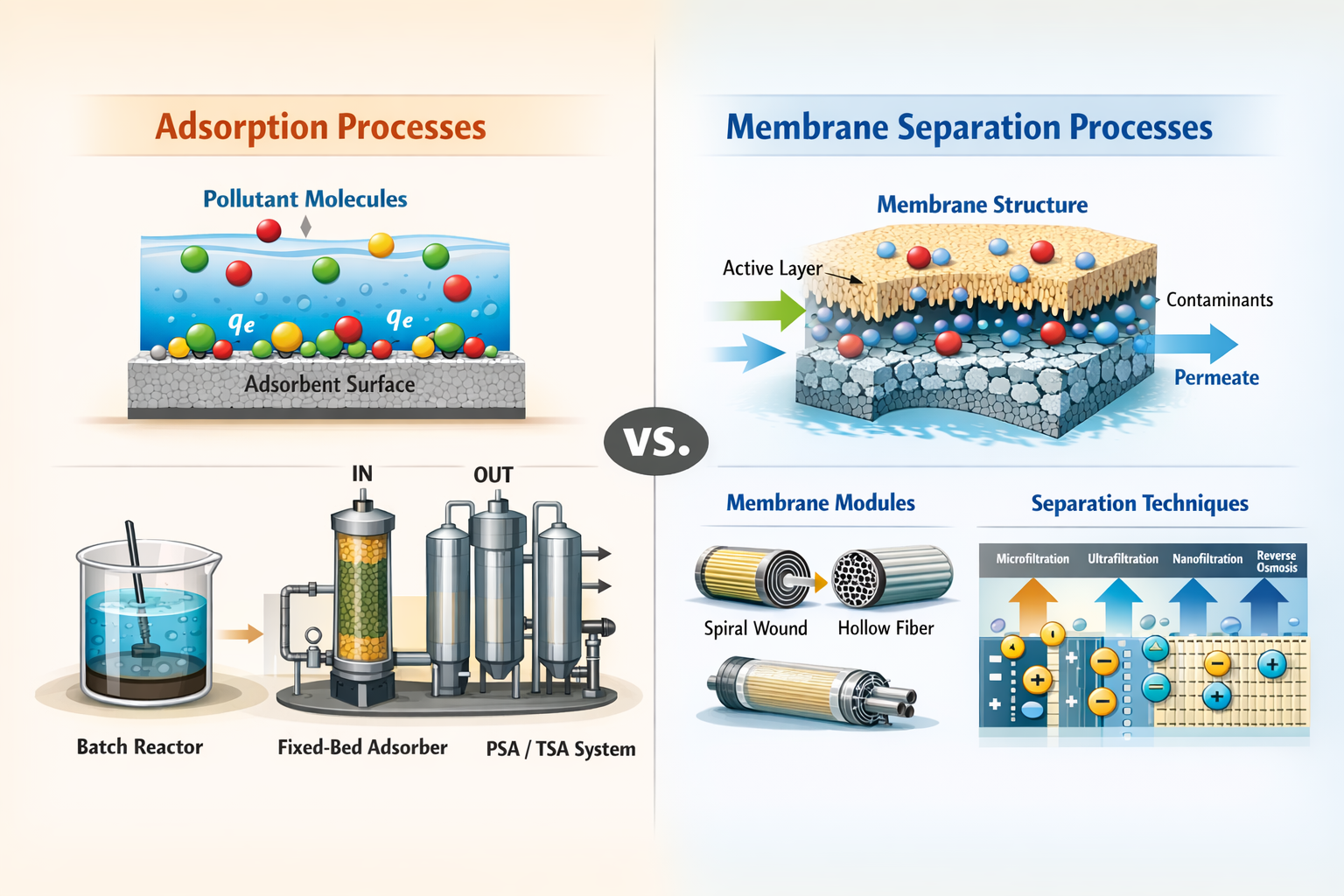
This course provides fundamental knowledge on adsorption and membrane separation processes. It aims to equip students with the theoretical and practical tools required for the design and operation of adsorption systems and to develop a solid understanding of membrane technologies and their industrial applications. The first part covers adsorption processes, including industrial adsorbents, selection criteria, regeneration methods, adsorption dynamics, and separation techniques such as pressure swing and temperature swing adsorption. The second part focuses on membrane processes, addressing membrane structure, characterization, industrial modules, and key separation techniques such as microfiltration, ultrafiltration, nanofiltration, reverse osmosis, and electrodialysis. A background in mass transfer, fluid mechanics, surface chemistry, and heterogeneous catalysis is recommended.
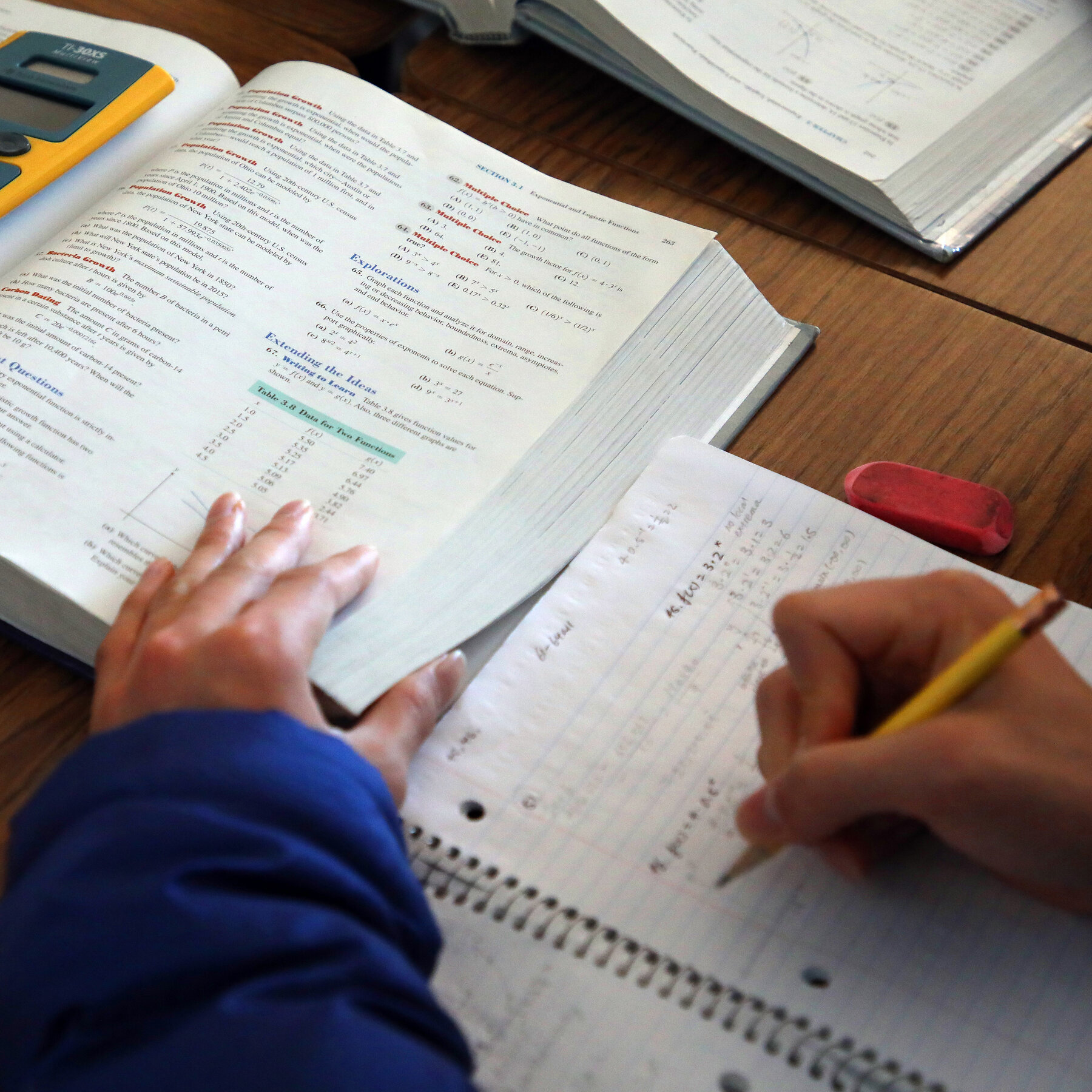
In
Algebra 1, we will learn the foundations of mathematics, where we will
consolidate and correct some of the concepts that the student has
acquired in his/her high school career. The student will also learn some
math tools and tricks to solve equations and make mathematical proofs.
In the first chapter, the student will be introduced to mathematical
logic and mathematical proof methods, where he will gain confidence and
ability to prove the truth and falsehood of statements, as well as
familiarize himself with some logical tools and operators as well as
with methods of using them. In the second chapter, the student will gain
a new understanding of set theory, as he will realize that concepts in
mathematics can be treated as sets. He will also apply what he learned
in the first chapter to sets, and he will learn about the types of
relations between sets as well as applications in sets. In the third
chapter, We will discuss the set of complex numbers and their
different representations. The final chapter, entitled Vector Spaces,
plays a crucial role in linear algebra. In this chapter, students learn
to work with linear equations in a systematic way and are introduced to
the concept of linear applications (linear transformations).
In
Algebra 1, we will learn the foundations of mathematics, where we will
consolidate and correct some of the concepts that the student has
acquired in his/her high school career. The student will also learn some
math tools and tricks to solve equations and make mathematical proofs.
In the first chapter, the student will be introduced to mathematical
logic and mathematical proof methods, where he will gain confidence and
ability to prove the truth and falsehood of statements, as well as
familiarize himself with some logical tools and operators as well as
with methods of using them. In the second chapter, the student will gain
a new understanding of set theory, as he will realize that concepts in
mathematics can be treated as sets. He will also apply what he learned
in the first chapter to sets, and he will learn about the types of
relations between sets as well as applications in sets. In the third
chapter, We will discuss the set of complex numbers and their
different representations. The final chapter, entitled Vector Spaces,
plays a crucial role in linear algebra. In this chapter, students learn
to work with linear equations in a systematic way and are introduced to
the concept of linear applications (linear transformations).

This course in Algebra II introduces the fundamental concepts of vector spaces, emphasizing their essential role in understanding dimensions, basis vectors, and coordinate representations. Particular attention is devoted to linear transformations and their relationship to changes of coordinates and bases, providing a coherent framework for interpreting transformations within vector spaces. These topics are developed in Chapter 1.
Chapter 2 focuses on matrices, a central tool in engineering and applied mathematics for representing and manipulating multiple numerical or functional quantities. The intrinsic connection between matrices and linear transformations is explored in order to establish a deeper and more unified understanding of matrix theory. Key matrix operations and properties, including determinants, transposes, and inverses, are also examined.
In Chapter 3, matrices are applied to the resolution of systems of linear algebraic equations, highlighting their practical importance in solving complex problems.
The final chapter is devoted to eigenvalues and eigenvectors. The objective is to study linear transformations from a vector space to itself in order to simplify matrix representations, particularly through diagonalization or reduction to canonical forms, thereby facilitating both theoretical analysis and practical computations.
This course in Algebra II introduces the fundamental concepts of vector spaces, emphasizing their essential role in understanding dimensions, basis vectors, and coordinate representations. Particular attention is devoted to linear transformations and their relationship to changes of coordinates and bases, providing a coherent framework for interpreting transformations within vector spaces. These topics are developed in Chapter 1.
Chapter 2 focuses on matrices, a central tool in engineering and applied mathematics for representing and manipulating multiple numerical or functional quantities. The intrinsic connection between matrices and linear transformations is explored in order to establish a deeper and more unified understanding of matrix theory. Key matrix operations and properties, including determinants, transposes, and inverses, are also examined.
In Chapter 3, matrices are applied to the resolution of systems of linear algebraic equations, highlighting their practical importance in solving complex problems.
The final chapter is devoted to eigenvalues and eigenvectors. The objective is to study linear transformations from a vector space to itself in order to simplify matrix representations, particularly through diagonalization or reduction to canonical forms, thereby facilitating both theoretical analysis and practical computations.
L’enseignement aura pour objectif de donner aux étudiants les connaissances nécessaires à la conception, à la réalisation des ouvrages hydrauliques dont la fonction est l’aménagement des cours d’eau.
Matière; Analyse3
Unité d’enseignement : fondamentale: UEF 3.1.1
Semestre : 3 Année Universitaire : 2024/2025 Crédit : 7 Coefficient : 4Volume horaire d’enseignement hebdomadaire:
· Cours (nombre d’heures par semaine) : 3H
· Travaux Dirigés (nombre d’heures par semaine) : 1:30H
Mode d’évaluation : Contrôle Continu 40% . l’Examen Final 60%
Pondérations du Contrôle Continu et de l’Examen Final: Assiduité, participation … 06Pts. Interrogation(1): 14 Pts.
Enseignant responsable de la matière : Dr. Smail KAOUACHE
Contact : s.kaouache@centre-univ-mila.dz / Tél :07 92 05 72 00
Objectifs de l’enseignement :
L’objectif de cette matière est de donner aux étudiants les connaissances nécessaires concernant les convergences simples et uniformes des séries de fonctions, le développement des fonctions en séries entières et séries de Fourier, les intégrales généralisées ainsi que les fonctions définies par une intégrale. Connaissances préalables recommandées : Analyse 1 et 2.
Contenu de la matière :
Chapitre 1 : Séries Numériques
Chapitre 2 : Suites et Séries de Fonctions
Chapitre 3 : Séries Entières
Chapitre 4 : Séries de Fourier
Chapitre 5: Intégrales impropres (Généralisées)
Chapitre 6 : Fonctions définies par une intégrale
Références
· J. Lelong Ferrand, Exercices résolus d'analyse, Dunod, 1977.
· J. Lelong-Ferrand et J. M. Arnaudiès, Cours de mathématiques, tome 2, Edition Dunod, 1978.
· J. Rivaud, Analyse «Séries, équations différentielles» -Exercices avec solutions, Vuibert, 1981.
· C. Servien, Analyse 3 « Séries numériques, suites et séries de fonctions, Intégrales », Ellipses, 1995.
Analysis 4
Teaching unit: fundamental: UEF 4.1.1
Semester: 4 Academic Year: 2025/2026 Credit: 7 Coefficient: 4Weekly teaching hours:
1. Course (number of hours per week): 3 hours
2. Tutorials (number of hours per week): 3 hours
Assessment methods: Continuous Assessment 40%, Final Examination 60%
Weighting of Continuous Assessment and Final Examination: Attendance, participation … 6 points. Continuous assessment(1): 14 points.Teacher in charge of the subject : Dr. Smail KAOUACHE
Contact : s.kaouache@centre-univ-mila.dz
Learning Objectives:
Learning Objectives:
The objective of this course is to provide the necessary knowledge regarding the differentiability of functions of several variables, the generalizations of the mean value theorem and Taylor's formula to functions of several variables, the calculation of extrema, and the calculation of multiple integrals. Recommended prior knowledge: Analysis 1 and Analysis 2
Contenu de la matière :
Chapiter 1 :Topology of IRn.
Chapiter2 :Real Fonctions of Several variables
Chapitre 3 :Multiples IIntégrals
References
· J.-M. Monier, Analyse PC-PSI-PT, Dunod, Paris 2004.
· Y. Bougrov et S. Nikolski, Cours de Mathématiques Supérieures, Editions Mir, Moscou, 1983.
· N. Piskounov, Calcul différentiel et intégral, Tome 1, Editions Mir, Moscou, 1980.
· J. Lelong-Ferrand et J. M. Arnaudiès, Cours de mathématiques, tome 4, Edition Dunod, 1992
Cours d'analyse numérique pour étudiants de deuxième année mathématiques. Chaque chapitre est suivi d'une série d'exercices.