

Chapter 4: Stress Physiology and Phenotypic Plasticity
الخطوط العريضة للقسم
-
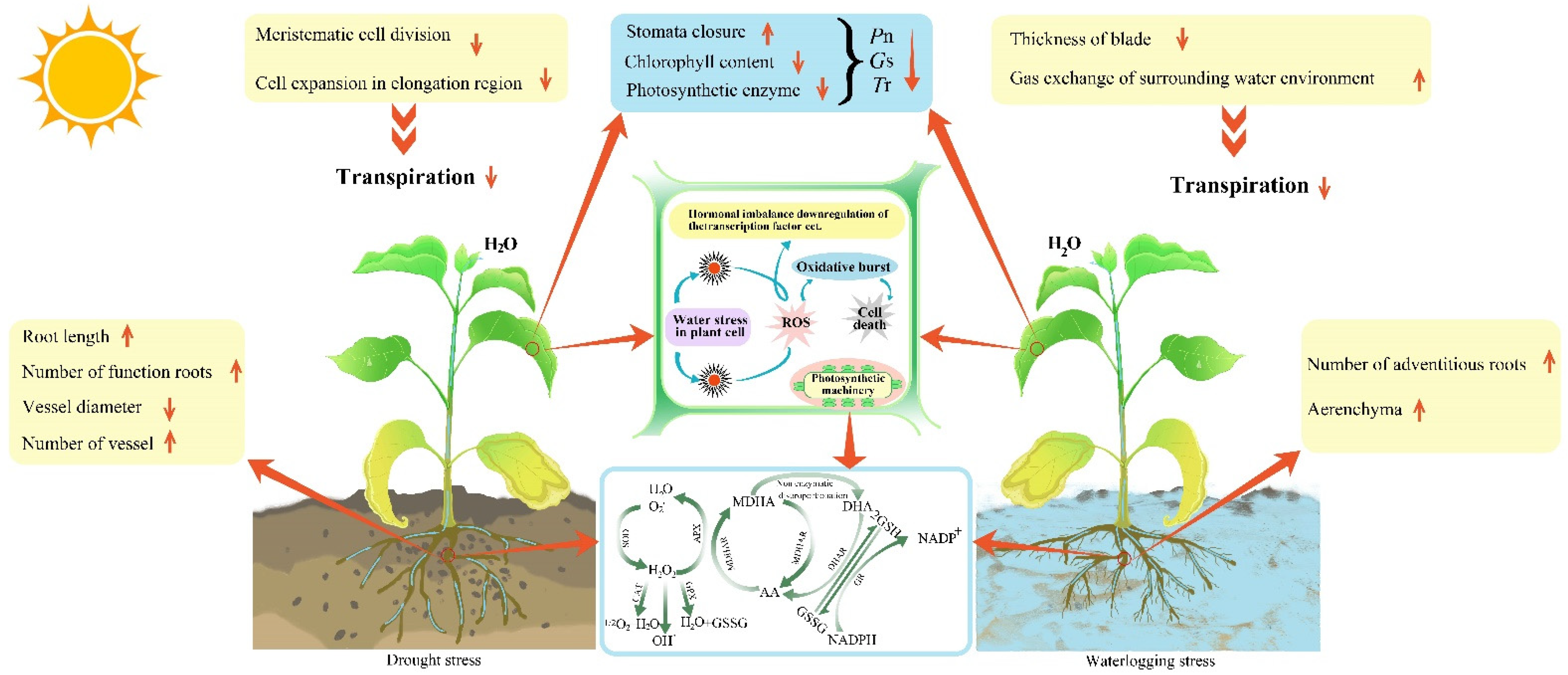
In this chapter, we will explore the physiological mechanisms involved in plant responses to environmental stresses and the role of phenotypic plasticity in plant adaptation and survival. Plants are constantly exposed to various environmental challenges, including abiotic stresses such as drought, salinity, oxidative stress, and extreme temperatures, as well as biotic stresses caused by pathogens and herbivorous organisms. These unfavorable conditions can disrupt cellular homeostasis, impair essential physiological processes, and negatively affect plant growth, development, and productivity.
To cope with these challenges, plants have developed complex adaptive mechanisms at the biochemical, physiological, and molecular levels. These mechanisms include the accumulation of compatible osmolytes, such as proline and glycine betaine, the synthesis of protective Late Embryogenesis Abundant (LEA) proteins, the activation of antioxidant defense systems to control reactive oxygen species (ROS), and the production of heat shock proteins (HSPs) to maintain protein stability under thermal stress. In addition, plants possess sophisticated innate immune systems that recognize pathogen-associated molecular patterns (PAMPs) and activate hormonal signaling pathways involving salicylic acid (SA) and jasmonic acid (JA) to coordinate their defense responses.
Furthermore, phenotypic plasticity allows plants to modify their physiological, biochemical, and morphological characteristics in response to changing environmental conditions, increasing their ability to tolerate stress and maintain essential biological functions. Understanding these mechanisms is therefore fundamental to explaining how plants adapt to environmental fluctuations, preserve cellular integrity, and improve their survival under unfavorable conditions.