Chapter II: Regulation of Carbon Metabolism and Resource Allocation
Résumé de section
-

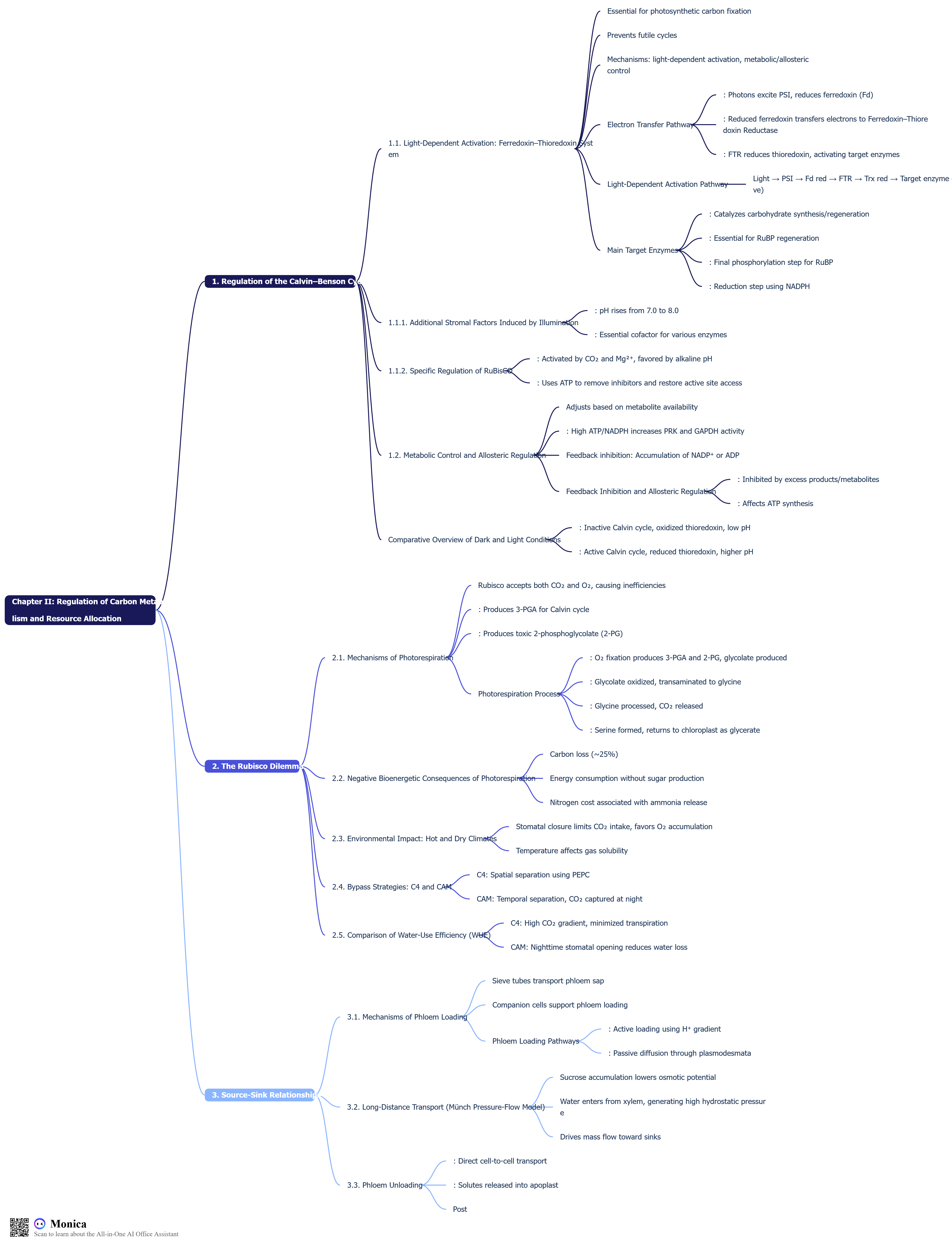
In this chapter, the regulation of carbon metabolism and resource allocation in plants is explored, highlighting the mechanisms that coordinate photosynthetic carbon assimilation, energy production, and the distribution and storage of organic compounds. These processes are essential for maintaining plant growth, development, adaptation to environmental conditions, and overall metabolic efficiency.
First, the regulation of the Calvin–Benson cycle is examined, with particular emphasis on light-dependent activation through the ferredoxin–thioredoxin system and the metabolic mechanisms controlling the activity of key enzymes. The chapter then addresses the dual catalytic activity of Rubisco, the mechanisms and energetic costs of photorespiration, and the adaptive strategies developed by C4 and CAM plants to minimize carbon losses and improve water-use efficiency. Furthermore, the source–sink relationships are discussed through the mechanisms of phloem loading and unloading, long-distance sucrose transport, and the involvement of specific membrane transporters, particularly SUT and SWEET proteins. Finally, the metabolism of starch is considered, distinguishing between transient starch accumulation in photosynthetic leaves and long-term starch storage in reserve organs such as seeds, roots, and tubers.
Overall, this chapter provides an integrated understanding of how plants regulate carbon assimilation, transport, utilization, and storage to optimize resource allocation and maintain metabolic balance under changing environmental conditions.