

Chapter 01: Introduction to Biotechnology
Résumé de section
-
chapter 01
Introduction to Biotechnology
Introduction
Biotechnologies encompass all techniques that utilize the resources of living organisms (tissues, cells, proteins, etc.) or their components (genes, enzymes, etc.), whether recombined or not, to generate knowledge, goods, or "bioservices" (services based on biotechnology, such as the production of proteins or transgenic animals).
Biotechnologies can be defined as "all technological applications that utilize biological systems, living organisms, or their derived parts to create or modify products or processes for specific uses." The use of biological systems for product manufacturing has been known since ancient civilizations. Evidence has been found of knowledge regarding the crossbreeding of animal species and plants to better meet specific needs, dating back to ancient Egypt.
1.1. The Origins of Biotechnology
About 10,000 years ago, humans began modifying the living world around them to improve their daily lives by selecting the plant and animal species they needed, sowing their crops, and breeding their livestock.
They also observed and utilized the fermentation processes caused by microorganisms, yeasts, and bacteria, of which they were, of course, unaware at the time. They discovered that raw materials could be transformed in various ways:
- Sugar could be converted into alcohol and carbon dioxide, forming the basis for the production of bread, wine, and beer;
- Alcohol could be converted into acetic acid during vinegar production;
- Bacteria could multiply in milk to turn it into yogurt.
Often discovered by chance, beer, wine, cheese, and other products emerged at different points in human civilization, several millennia before Christ.
1.2. Evolution of Biotechnology Over Time
In the 19th century, the work of three scientists laid the foundations for modern biotechnology. Louis Pasteur and Robert Koch developed bacteriology and the concepts of microbial disease, immunity, and vaccination. Johann Gregor Mendel described the laws governing the transmission of biological traits between generations (laws of heredity).
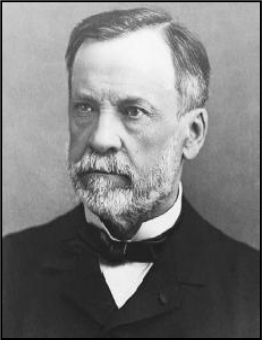

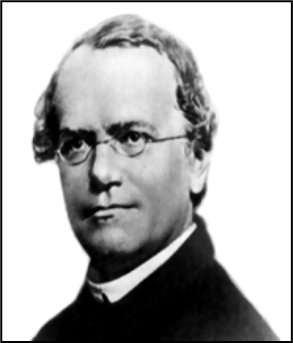
Louis Pasteur Robert Koch Johann Grégor Mendel
The second half of the 20th century saw a significant acceleration in the understanding of living organisms, thanks to advances in science and technology. In 1944, American microbiologist Oswald Avery demonstrated that DNA is the carrier of heredity. In 1953, James Watson and Francis Crick built upon Avery's work by discovering the structure of DNA, enabling the direct manipulation of genetic traits.
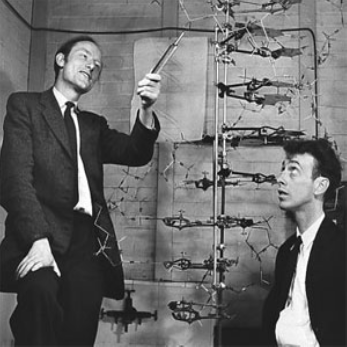
James Watson et Francis Crick
Gene insertion techniques for "foreign" genes into the genetic material of bacteria were first developed in the 1970s, marking a decisive step in the biotechnology revolution.
The first product of modern biotechnology was recombinant insulin, a protein produced by the pancreas that helps regulate blood glucose levels, essential for diabetic patients who can no longer produce their own insulin. In 1978, the human insulin gene was transferred into the bacterium Escherichia coli at Herbert Boyer's lab at the University of California, San Francisco.
Since the mid-1990s, the field of transgenesis has received significant media attention and continues to expand, with expected advancements in nanotechnology and bioinformatics.
1.3. The Major Current Challenges of Biotechnology and Bio-Nanotechnology.
-Biotechnology is multidisciplinary in nature, involving contributions from: engineering, computer science, cellular and molecular biology, microbiology, genetics, physiology, biochemistry, immunology, virology, recombinant DNA technology, and more.
-Today, it is estimated that over 20% of new drugs launched worldwide come directly from biotechnology, and 80% of drugs currently in development are based on biotechnological discoveries or tools. However, biotechnology is not limited to human health; challenges for animal health, agri-food, industry, and the environment are also significant.
-Transgenic biotechnology is now radically new: it relies on knowledge that was not even taught before.
-The economic prospects are substantial. How can we finance long and costly developments?
-These technologies often evolve faster than our understanding of their impacts, making it difficult to assess the benefits of a new application and the risks it entails.
1.4. Definition of Red, White, and Green Biotechnologies
Biotechnologies can be classified into three categories: red, white, and green.
Red biotechnology pertains to medical processes, such as designing organisms to produce antibiotics or developing gene therapies through genome manipulation. This field impacts health, particularly in the pharmaceutical industry, where much current research relies on biotechnology.
White biotechnology (also known as gray biotechnology) relates to industrial processes, such as developing living organisms for chemical production. It is generally less resource-intensive than traditional industrial processes. Initial applications are found in sectors like polymers, fuels, solvents, construction, textiles, and various chemical products.
Green biotechnology refers to applications in agriculture, such as developing transgenic plants that can grow under specific environmental conditions with or without certain chemicals. Green biotechnology includes all in vitro and laboratory interventions on the embryos, organs, tissues, cells, or DNA of plants to either control or accelerate their production or modify their characteristics. Researchers hope to address agricultural challenges while ensuring food production, energy production, and biomaterial production in an environmentally sustainable manner.
1.5. Typical Products of Biotechnology
GMOs
Genetically modified organisms (GMOs) are products of green biotechnology. They offer certain advantages, such as simplified cultivation practices and reduced pesticide application.Medicines and Vaccines
Historically, medicines (excluding vaccines and serums) were produced by the chemical industry. Since the 1980s, biotechnology has been used to produce treatments that are impossible or too costly to obtain through chemical synthesis. The first applications involved the production of vaccines and antibiotics. Biotechnology allows for the replacement of products extracted from human or animal organs with molecules produced through genetic engineering.
Example:- Insulin produced by bacteria instead of extracted from pig pancreases for diabetes treatment.
Cloning
Therapeutic cloning involves creating human organs or tissues from cells for therapeutic purposes.Example:
In cases of myocardial infarction, cardiac muscle cells can be created to replace damaged heart cells.
Biobased Materials (BBM)
These are substances or molecules produced naturally or through biological processes. Their origins can be bacterial, plant, or animal. These materials can include:- Fibers: Spider silk, collagen, bacterial cellulose for dressings, artificial skin, or implants.
- Gels: Latex, polysaccharides for ophthalmic lenses, dressings, and artificial skin.
- "Massive" materials: Coral, mother-of-pearl, ceramics for prosthetics and bone substitutes.
In Food
*Production of genetically modified foods or animals:Improvement of Existing Products:
- Seedless grapes and citrus fruits.
- Development of fruits and vegetables with high antioxidant levels.
*Creation of New Product:
- Identification of the active components in milk and the associated genes, followed by the modification of the genetic makeup of dairy cows so that they produce more of these components in their milk. One of the applications: milk with coagulation factor for hemophiliacs.
Animal Feed: Improvement of the nutritional qualities of plants, obtaining lignin-poor crops: to enhance livestock health, making it easier for ruminants to digest or chew.
- Functional Foods: The production of functional foods (incorporation of a nutrient intended for healing) through GMOs is more economical than traditional production using bacteria. Example: Development of a banana variety for the production of multiple proteins aimed at immunizing children against bacteria and viruses causing diarrhea.
- The Environment: Environmental biotechnology focuses on environmental preservation, improvement of energy processes, and raw materials (new processes, pollution control, energy efficiency, alternative energy). Example: Production of biofuels: Made from biomass, these biofuels offer two advantages:
- A reduction in pollutant gas emissions (which impact health, vegetation, buildings, and the greenhouse effect)
- The preservation of non-renewable fossil natural resources. Currently, two types of biofuels can be blended with fossil fuels:
- Alcohols and their derivatives (methanol, ethanol).
- Esters and their derivatives (FAME). Comparative example: Ethanol production In a complete cycle—production, transfer, and consumption:
- 1 liter of gasoline = 3.1 kg of CO2
- 1 liter of ethanol (chemical production) = 2.3 kg of CO2
- 1 liter of ethanol (biotechnological production) = 15 g of CO2
Bioremediation: Bioremediation involves the biodegradation or transformation of polluted areas contaminated by heavy metals, explosives, oil, or toxic chemicals. Selected and genetically modified plant varieties can capture and accumulate heavy metals from the soil, such as arsenic. Modified microbes residing in the soil can digest certain contaminants, converting them into harmless substances.
1.6. Affected Industrial Sectors:
Companies utilize industrial biotechnology to:
- Reduce costs,
- Increase profits,
- Enhance product quality,
- Optimize processes and their monitoring,
- Improve technology safety and hygiene,
- Comply with environmental regulations.
Recombinant DNA and Genetic Engineering: Molecular biology has led to the most significant discovery in biotechnology: it is now possible to isolate the gene responsible for coding the production of certain substances, transfer it into another host organism, and thus produce useful proteins more efficiently. Thanks to these advancements, biotechnology now produces hormones, vaccines, blood clotting factors, and enzymes on a large scale. Additionally, the biotechnological production of proteins avoids the drawbacks of production from higher organisms:
- Unlike the culture of microorganisms, large-scale culture of higher organism cells is impractical due to slow growth and frequent contamination.
- The cost of cell culture is significantly higher than that of microbial culture.
- The source of cells from higher organisms is much more limited compared to unicellular organisms, which also reproduce easily and quickly.
Fermentation: Along with biocatalysis, fermentation processes are among the oldest forms of biotechnology. Fermentation is the application of microbial metabolism to transform a material into value-added products. This process can produce an incredible variety of useful substances, such as citric acid, antibiotics, biopolymers, and single-cell proteins, among others. The potential is immense and vast; it simply requires knowing the appropriate microorganism, controlling its metabolism and growth, and being able to utilize it on a large scale.
Fuels and Organic Products as Alternatives to Oil: Oil is a non-renewable raw material, meaning that its uncontrolled or increasing use is limited. Biotechnology, on the other hand, uses renewable materials, allowing for its controlled use to potentially extend indefinitely. In the event of oil depletion, biotechnology can provide two solutions: new fuels and an alternative source of organic products. For example, utilizing waste from sugarcane production to obtain alcohol is a process that leads to energy savings.
Biocatalysts:
Application of Enzymes in the Industrial Sector:
Enzymes are becoming increasingly important in sustainable industrial development. They have already been employed in the development of industrial processes to produce waste-free products or those containing minimal biodegradable waste. Indeed, enzymes can replace toxic or corrosive chemicals in several processes. Moreover, their advantage lies in their ability to be used, deactivated, and broken down into simpler, completely biodegradable products.
Many industrial processes operate at high temperatures or pressures, or under highly acidic or basic conditions. Enzymes can avoid these extreme conditions as well as the use of corrosive reagents.
Here is a quick overview of enzymatic processes currently used in various sectors to reduce chemical load by eliminating the industrial production of aggressive, toxic, or simply polluting substances:
Detergent Industry:
- Enzymatic degradation of proteins, starch, and grease stains in laundry,
- Use of lipolytic enzymes in dishwasher detergents,
- Use of enzymes as surfactants.
Textile Industry:
- Stone washing of denim fabrics,
- Enzymatic desizing of flat-woven cotton fabric,
- Eco-friendly bleaching,
- Enzymatic degreasing of cotton fabrics,
- Degumming of silk.
Starch Industry: Enzymatic production of dextrose, fructose, and special syrups for baking, confectionery, and beverage industries.
Beer Industry: Enzymatic degradation of starch, proteins, and glucans from the grain mixture used in beer production.
Bakery and Bread Industry: Enzymatic modification of carbohydrates and proteins in grains to improve bread properties.
Wine and Juice Industry: Enzymatic degradation of pectin from fruits in the production of juices and wines.
Alcohol Industry: Degradation of starch into sugars prior to fermentation and alcohol production.
Food and Additives Industry:
- Improvement of nutritional and functional properties of animal and plant proteins,
- Conversion of lactose from milk and whey into sweeter and more easily digestible sugars,
- Production of cheese flavors.
Animal Feed Industry: Enzymatic hydrolysis of protein material from slaughterhouses to produce high-nutritional value meals for animal feed.
Cosmetic Industry: Biotechnological production of collagen and other products for use in beauty creams.
Paper Industry:
- Enzymatic dissolution of pitches,
- Eco-friendly bleaching of pulp,
- Enzymatic control of the viscosity of starch coatings.
Tanning Industry: Preparation of hides and removal of hair and fat.
Oils and Fats Industry: Enzymatic hydrolysis of fats and lecithin, and synthesis of esters.
Fine Chemical Industry: Synthesis of organic substances.
1.7. Challenges of Biotechnological Innovation.
Research and Development: The primary declared challenge of research on GMOs pertains to both food and health. Chemical and biological treatments have improved agricultural production conditions over the years; however, the use of phytosanitary products (herbicides, insecticides, fungicides) has rendered this human activity polluting. In the health sector, research focuses on diagnostics, treatments, and the development of vaccine products.
- Socio-economic Factors: The potential economic benefits of employing genetic engineering are numerous and possibly substantial. However, given that transgenic plants have only been cultivated since 1995 and in a limited number of countries, there is still insufficient data to empirically confirm or refute these potential benefits.
- Geopolitical Factors: The Earth is home to approximately six billion individuals today, a number that is rapidly increasing, with significant disparities between populations based on geographic regions.
- Ethical Questions: Biotechnologies raise significant and challenging ethical questions. An extensive international discourse is underway regarding these issues. These ethical considerations primarily relate to the very nature of genetic research and its applications, particularly concerning human health: it involves living organisms and our genetic heritage, which gradually reveals its history, richness, complexity, potentialities, and predispositions.
- Research Transfer Weakness: The historical weakness in transferring scientific research to technological innovations has been evident in the biotechnology sector, characterized by a low level of research involvement in the economic valorization of discoveries. This has resulted in a scarcity of "biotech" companies, which are founded on the initial exploitation of scientific innovations for technological purposes. The few notable exceptions have only highlighted the overall poverty of the sector. However, in recent years, the situation has begun to change.