مخطط الموضوع
Mineralogy
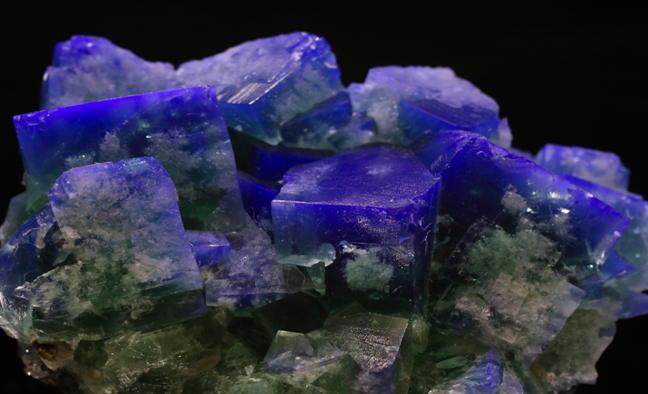
The mineralogy course focuses on the study of minerals, the basic components of the earth's crust.
Students will be introduced to fundamental concepts of mineralogy, including the atomic structure of minerals, the geological and chemical processes that lead to their formation, the techniques used to identify them, and the study of their different groups.
Contact Sheet
Teacher: Mr. BOUFEDAH BADISSI Mohamed Salah
Contact: boufadahbadis@gmail.com / boufedah.m@centre-univ-mila.dz
Availability: - In the laboratory: Sunday, 9:00 - 12:00
- By email: Within 24 hours of receipt of the message, except in the event of unforeseen circumstances.Faculty: Natural and life sciences
Department: : Science of the Earth and the Unives
Target audience: 2nd year LMD Applied geology
Course title: MINERALOGY
Semester: 01
Teaching unit: Fundamental UEF 2.1.2
Credit: 06
Coefficient: 03
Duration: COURSE: 01h30 per week
PRACTICLE WORKS: 03 hours per week
Schedule: SUNDAY: 12:30 - 14:00 (Course)
14:00 - 17:00 (Practical works)
Evaluation method: Exam + micro-interrogation
Objectives
The student is expected to know the different mineral classes, with their physical and chemical characteristics.
Prerequisites

The student must know the basic elements of mineralogy, taught in the 1st year of Geology.
Overall Plan

Course
Chapter I: Notions of Crystallochemistry
- Reminders of the structure of the atom and chemical bonds
- Reminders of some definitions (crystal, mineral etc.)
- Definition of coordination, isotypism, isomorphism and polymorphism
Chapter II: Classification of minerals (the nine groups)
1. Class of native elements.
2. Class of halides.
3. Class of sulfides and sulfosalts.
4. Class of oxides and hydroxides.
5. Classes of carbonates…
6. Classes of sulfates…
7. Class of phosphates…
8. Class of silicates
9. Borate class
Practical work:
1. Definition of a mineral, optical and physical properties. (density……………….)
2. Class of native elements.
3. Class of halides.
4. Class of sulfides and sulfosalts
5. Class of oxides and hydroxides.
6. Classes of carbonates…
7. Classes of sulfates…
8. Class of phosphates…
9. Class of silicates
10. Borates