General Ecology


Abdelhafid Boussouf University Center - Mila
Faculty of Natural and Life Sciences
Department of Ecology and Environmental Sciences
Second-year : Ecology and Environment
Semester: 4
Teaching Unit: Methodology 1
Subject 2: General Ecology
Instructor: Dr. REBBAH Abderraouf Chouaib
Dr. REBBAH Abderraouf Chouaib
E-mail :
a.rebbah@centre-univ-mila.dz
rebbahabderraoufchouaib@gmail.com
⏰ Consultation Hours / Heures de consultation :
Sunday / Dimanche : 12:30 - 14:00
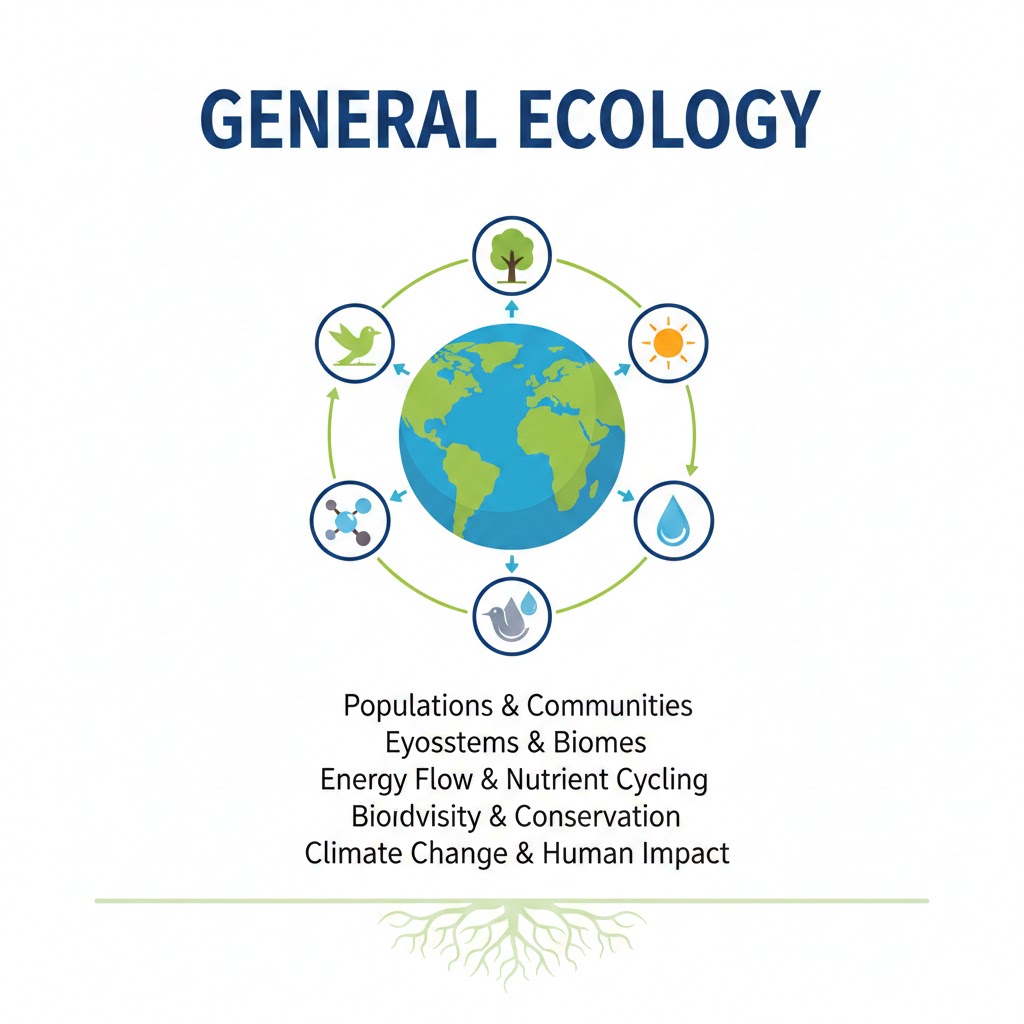
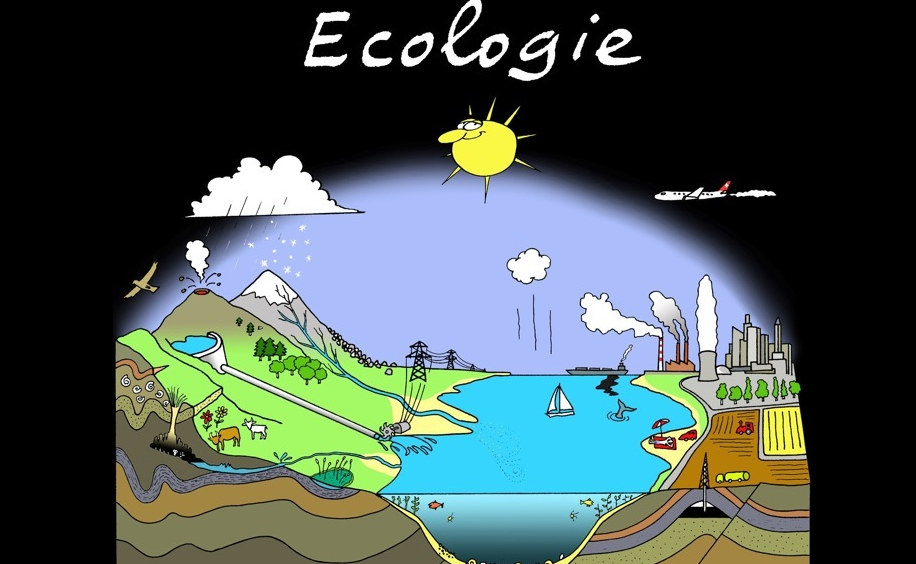
Ecology is the fundamental science that studies the complex interactions between living organisms (the biocenosis) and their physical environment (the biotope), which together form the functional unit known as an ecosystem. Its importance is vital today, as it allows us to understand how energy flows and how matter recycles to maintain the balance of the biosphere. By analyzing key concepts such as biodiversity, biogeochemical cycles, and ecological valence, ecology provides the necessary scientific tools to diagnose environmental degradation such as pollution, the greenhouse effect, and biodiversity loss and to propose sustainable solutions. It stands as an essential pillar for human survival, ensuring the preservation of resources and the stability of the natural services upon which we all depend.
The objective of this course is to provide students with a comprehensive understanding of the ecosystem concept by examining the complex interactions between abiotic and biotic factors. Students will explore how physical environmental conditions such as climate and soil interact with biological relationships like competition and symbiosis to shape natural habitats. By analyzing the essential components of an ecosystem and its internal dynamics, the course aims to explain the fundamental mechanisms of energy flow and nutrient cycling that ensure the functioning and stability of the biosphere.
Ecology is a branch of biology that studies the relationships between living organisms (microorganisms, plants, animals, and humans) and their environment (physical, chemical, and biological factors).
The term ecology comes from Greek:
Ecology is both a science and a social movement that studies the relationships between living organisms and their environment. It emerged in the 19th century with the work of scientists such as Ernst Haeckel, who introduced the term "ecology" in 1866 to designate the study of interactions between organisms and their surroundings. However, it was not until the 20th century that ecology became a fully recognized scientific field, notably with the development of population ecology, ecosystem ecology, and nature conservation.
Ecology, far beyond its common media or political perception, is established as the rigorous science of systemic interactions. Coined in 1866 by the biologist Ernst Haeckel, the term derives from the Greek roots oikos (the dwelling) and logos (the study), thus defining the "science of the habitat." It analyzes the structure and functioning of ecosystems—those functional units where the biotope (the physico-chemical environment) and the biocenosis (the community of living beings) mutually influence each other through flows of matter and energy. This discipline is intrinsically interdisciplinary: it mobilizes physiology to understand the adaptive responses of organisms, thermodynamics for the study of energy transfers, biogeochemistry for nitrogen or carbon cycles, and stochastic mathematics to model population dynamics. Today, ecology no longer merely describes nature; it quantifies the impact of the Anthropocene, the era in which human activities have become the primary geological force altering the biosphere.
At the heart of this dynamic, biodiversity constitutes the living fabric of the planet, with a complexity that exceeds a simple inventory of fauna and flora. It is categorized into three inseparable levels: genetic diversity, species diversity, and ecosystem diversity. Flora, as primary producers, capture approximately 120 gigatonnes of carbon per year through photosynthesis, providing the energy base for almost all trophic chains. Fauna, for its part, ensures critical regulatory functions; it is estimated, for example, that 75% of global crops dependent on human food production rely in part on animal pollination. This interdependence creates a homeostatic balance where each ecological niche contributes to global resilience. However, we are currently witnessing an unprecedented erosion: according to the IPBES report, approximately one million animal and plant species are currently threatened with extinction—a disappearance rate 100 to 1,000 times higher than the geological norm.
The balance of this "common home" is now disrupted by major anthropogenic pressures, foremost among which are systemic pollutions and climate forcing. The atmospheric concentration of $CO_2$ has crossed the critical threshold of 420 ppm (parts per million), a level not seen for millions of years, leading to a global temperature increase of more than 1.1°C compared to the pre-industrial era. This warming is not uniform: it is accompanied by ocean acidification (a decrease of 0.1 pH units representing a 30% increase in acidity), which compromises the survival of coral reefs that harbor 25% of marine life. At the same time, plastic pollution has reached alarming proportions, with more than 8 million tonnes of debris dumped annually into the oceans, entering the food chain down to the cellular level through microplastics.
Finally, the loss and fragmentation of natural habitats constitute perhaps the most direct driver of the collapse of biodiversity. Agricultural expansion and galloping urbanization have transformed more than 75% of the Earth's land surface into human-dominated environments. Fragmentation divides formerly vast ecosystems into isolated micro-populations, increasing vulnerability to genetic and climatic hazards. It is estimated that tropical deforestation progresses at a rate of 10 million hectares per year, destroying essential carbon sinks. This compartmentalization of landscapes breaks the biological corridors necessary for seasonal migrations and seed dispersal. The need to study the environment thus becomes a survival imperative: understanding these mechanisms is the only lever allowing a transition from an extractive economy to a regenerative management of the biosphere, guaranteeing the maintenance of the ecosystem services upon which humanity depends.